James Dolan’s board spent Tuesday approving the spinoff that chops the Rangers out of Madison Square Garden Sports and hands them their own stock ticker, and he wants credit for it. “We believe each company will be well-positioned to generate long-term value for shareholders,” Dolan said in the official announcement, a sentence that uses the words “value” and “shareholders” and manages to skip “fans,” “tickets,” and “hockey” entirely.
The mechanics, if you care: MSG Rangers Corp. becomes the new public company, holding the Rangers, the team’s training facility, and the Hartford Wolf Pack. What’s left of MSG Sports turns into MSG Knickerbockers Corp., home to the Knicks. The split goes final on October 26, and shares in the Rangers’ new company start trading under ticker MSGR on October 27. Beat writer Mike Vorkunov laid out the structure the same day Dolan’s statement went out:
MSG Sports will spin off the New York Knicks and Rangers into separate publicly traded companies, after its board approved the move. Transaction will be completed on Oct. 26.
MSG Sports will be MSG Knickerbockers Corp. It'll own the Knicks and Westchester Knicks.
MSG Rangers… pic.twitter.com/QZO1OkR3WT
— Mike Vorkunov (@MikeVorkunov) September 30, 2026
Dolan stays CEO of both new companies, so nothing about who makes the actual decisions changes. What changes is who he has to answer to every quarter, out loud, in a filing. If you’re a current MSG Sports shareholder, you’ll get one share of the new MSG Rangers for every two MSG Sports shares you hold as of the October 20 record date, a tax-free distribution that costs Dolan nothing to execute.
The numbers explain the timing better than the press release does. The Rangers and Knicks combined for $1.15 billion in revenue last fiscal year, but MSG Sports currently trades at an $11 billion enterprise value, well under the roughly $17 billion analysts at Sportico think the two teams are worth once they’re split apart. Carving them into two tickers is one way to close that gap. Wall Street gets the better math almost immediately. Rangers fans get a press release and a quote about shareholder value.
Rangers hockey operations lost $30.5 million in fiscal 2026, after losing $23.3 million the year before, and turned an actual profit only in 2024, the one recent season they made the playoffs. Public companies post paper losses all the time while owners extract value somewhere else on the balance sheet, so the losses alone don’t force anyone’s hand on ticket prices. What they do guarantee is an audience: a standing group of shareholders who read those numbers every quarter and ask questions Dolan never had to answer out loud before.
There’s precedent for a team like this answering to public shareholders, and none of it is reassuring. The Green Bay Packers are the only other major American sports franchise with publicly traded stock, and they raised their own ticket prices again this year. MSG didn’t even need outside shareholders to test the idea first: it rolled out a 12 percent ticket price increase earlier this year and only walked it back after fans pushed back hard enough, telling fans “our intention was never to overcharge our loyal fans.” Those are the company’s own words, about its own prices, before a single share of MSGR has traded. Atlanta is the only other model in pro sports with a fully public team, and the Braves going public in 2023 didn’t come with any price relief for Atlanta fans either.
Most team owners go out of their way to avoid ending up in this spot. Public ownership means shareholder pressure, regulatory disclosure, and quarterly scrutiny that a private company never has to deal with, which is exactly why Dolan, who already handed his own son the team’s presidency rather than cede control to anyone outside the family, is one of the only owners in the sport willing to try it. That’s usually about liquidity for the person at the top, not clarity for the person buying tickets, and not necessarily more money for the roster Drury has to build with. Two weeks before the spinoff closed, the Rangers rolled out a new $150-a-month ticket plan for the lower bowl, which is either a coincidence or isn’t one.
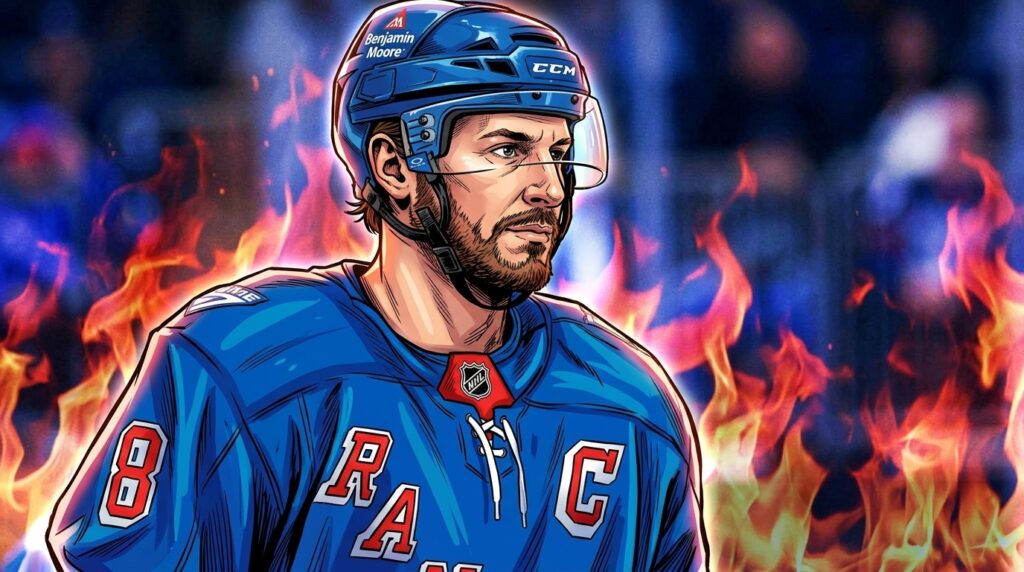
None of this has anything to do with whether the actual hockey team is good, except that it has everything to do with it. J.T. Miller is entering his second season as Rangers captain, and the Rangers open their 101st season Thursday at home against Tampa Bay. Somewhere in a prospectus filed with the SEC, Miller’s jersey number is now attached to a ticker symbol instead of just a shot chart. He still has to win faceoffs and kill penalties. He also plays for a company whose board answers to people who have never seen him do either.
Rangers fans already know they have more leverage here than Dolan wants to admit — the 12 percent hike didn’t survive three days once enough people complained. The spinoff doesn’t erase that leverage. It just means the next fight over what a ticket costs will happen inside a public company that has to explain itself to shareholders every quarter, instead of a private one that only ever had to explain itself to Dolan. Read the filings when they come out. That’s where the actual decisions about this team are going to get made, long before any of them show up on the ice.